
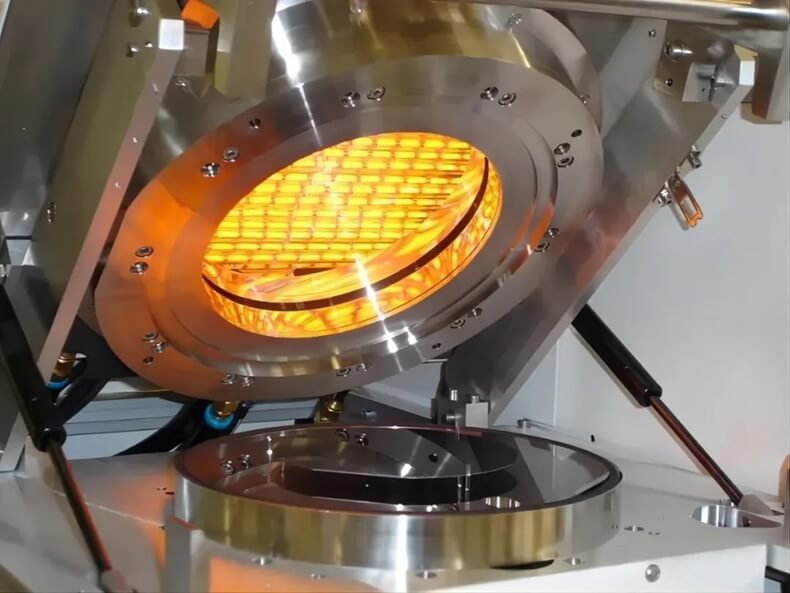
Getting IR Heating and Sensing Right in Wafer Fab
There’s a real push right now to get semiconductor tools to be more carbon-neutral. To do that, we’re moving away from old-school resistive heating and leaning into short-wave infrared (IR) instead. The big win here? You’re hitting the wafer surface directly. No more heating up the entire chamber just to get the wafer to the right temperature. It cuts out a ton of waste heat and keeps the power bill down. The nitty-gritty of the heat In a wafer tool, it all comes down to heat density. We stick with halogen-based IR lamps because they’re incredibly fast. They ramp up the temperature quicker than anything else we’ve got. But speed can be dangerous. If you don’t pair those lamps with pinpoint-accurate sensors, you’ll overshoot your target. And in this business, overheating isn’t just a waste of power—it’s a great way to scrap an expensive wafer. The sensor struggle Here’s the thing: you can’t just rely on the air temperature when you’re working in a vacuum. It doesn’t work. Instead, we use non-contact pyrometers to keep an eye on the wafer’s emissivity. That sensor talks to the power supply, which then dials the lamp output up or down in real-time. If that sensor lags or you’ve got the wrong specs, you’ll end up with thermal gradients. That means some spots on the wafer are hotter than others, which leads to messy, non-uniform etching or deposition. Not ideal. The trade-offs Switching to IR is a great way to actually hit those “green factory” goals. You slash the warm-up times and get way more bang for your buck from the energy you use. But it’s not a free lunch. High-intensity IR lamps put out a massive amount of concentrated heat. You’ve got to be smart about your cooling manifolds and heat sinks. If your cooling can’t keep up, the lamp housing takes a beating and the quartz envelope wears out way too fast. At the end of the day, the only way to stop burning through excess kilowatts is to make sure your sensors are calibrated perfectly.