

Stop Turning Your Semiconductor Tools Into Ovens
Standard infrared heaters have a bad habit of bleeding heat everywhere. When you cram them into a tight equipment housing, that heat doesn’t just vanish—it hits the inner walls. Pretty soon, your entire chassis is acting like a giant heat sink. The result? An outer casing that’s way too hot to touch and cooling systems that have to scream just to keep your electronics from frying. It’s a mess.
How we fix the “Oven Effect”
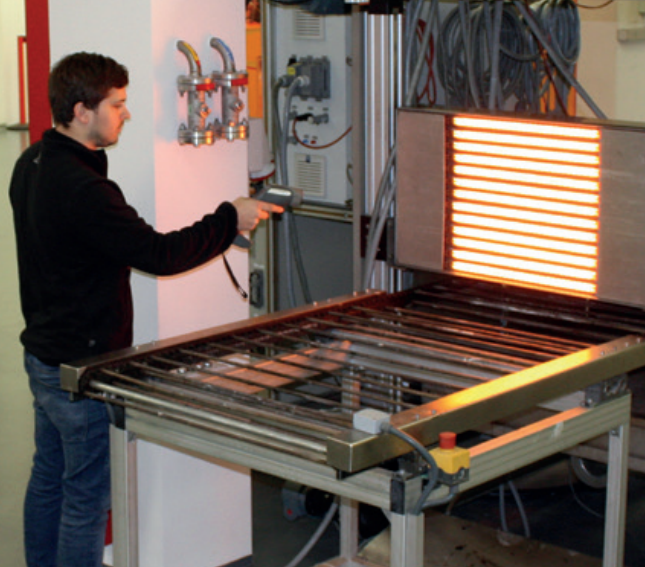
We handle this with carbon fiber filaments. Think of traditional quartz coils like a lightbulb that glows in every direction. These lamps are different. By tweaking the filament geometry and adding a reflective back, we push the IR energy forward, straight at the wafer or substrate. It puts the heat exactly where it needs to be. Because the energy isn’t bouncing around the cabinet like a pinball, your inner walls actually stay cool.
The catch (because there’s always one)
Directional lamps give you a much tighter beam, but you can’t just “plug and play.” You have to get the focal distance right. If you mount them too close or too far, you’ll end up with cold spots or uneven heating on your workpiece. If you’re swapping these into a system built for wide-angle heaters,double-check your spacing first. Don’t wing it.
A win for your team and your gear
The best part is how this feels on the floor. Your technicians aren’t going to burn their hands on the chassis during a quick check. That’s a huge relief for anyone who’s actually had to touch the machine. And it’s not just about the people. Your sensors and wiring aren’t being baked alive anymore. When the cabinet walls aren’t soaking up all that wasted heat, your internal components last longer. Less time swapping out brittle, heat-damaged cables means more time actually running production. Simple as that.