

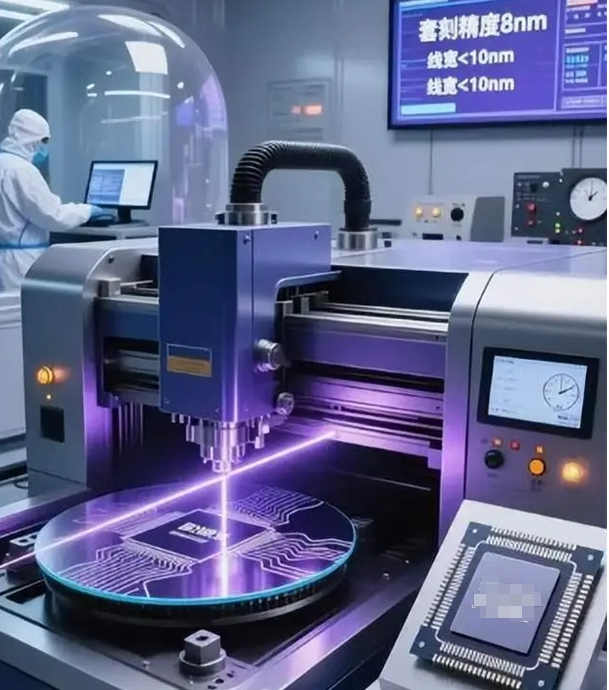
On the line, temperature isn’t a knob to tweak—it’s a hard boundary. In quantum dot (QD) fabrication, the thermal budget during photoresist processing, annealing, and QD layer formation sets your line-width control, defect density, and yield. A few degrees of drift across the wafer, a lag in the bake response, or a particle spike in the cleanroom air—any one of those can turn a good run into scrap. We built the quantum dot fabrication heater to take those unknowns off the table. It’s engineered for semiconductor thermal realities: tight uniformity, fast settling, clean operation, and repeatability that holds across shifts, lots, and tools.
What actually matters
Wafer-level uniformity: ±0.1°C. That number isn’t a selling point—it’s what keeps your process in control. Across a 300 mm wafer, ±0.1°C cuts photoresist bake variation, the kind that shows up as CD excursions after lithography. The heater hits this with a thermal design and closed-loop control tuned to semiconductor profiles. Cleanroom compatibility: Class 1–100. The housing and airflow paths are specified for ISO Class 1–100 environments. Internal materials are chosen to minimize outgassing, and the air path is laid out to avoid shedding particles. In practice, that means particle counts stay stable during long bakes and during fast temperature transitions. Zero particle generation under normal operation. Particle generation is measured and controlled as part of the system spec. The expectation is simple: the heater doesn’t become a source of yield loss. For QD device stacks—small features, sensitive surfaces—even low particle levels can create defects that are painful to rework. Photoresist bake precision: soft bake and hard bake. Photoresist processing is where thermal control meets chemistry. The heater delivers stable, repeatable bake profiles for both soft bake and hard bake, with fast setpoint changes and tight overshoot control. That gives you consistent solvent removal, controlled cross-linking, and predictable etch resistance. 24/7 reliability with zero unplanned downtime. Fabs run on schedule, not convenience. The heater is built for continuous operation with planned maintenance, not surprises. Components are selected for long life under thermal cycling, and the control strategy reduces stress on heater elements and sensors. Reliability shows up as uptime and stable performance over thousands of bake cycles. Process repeatability: temperature setpoint to setpoint. Repeatability has to hold across tool-to-tool matching, lot-to-lot consistency, and time. The heater keeps thermal repeatability tight enough to support SPC on temperature, so you can keep drift within control limits without constant recalibration. Energy efficiency without thermal compromise. The heater is designed to cut energy use while protecting thermal performance. That means faster ramps without excessive overshoot, stable holds with low control effort, and reduced standby power. Energy savings only matter when they don’t cost you uniformity or stability.
Why this matters in QD fabrication
Quantum dot fabrication is thermally dense. You’re stacking thin films, defining features, and running bakes that set each layer’s properties. When the heater underperforms, you see the same failure modes every time:
- Photoresist bake non-uniformity drives uneven development and CD shifts.
- Temperature lag during setpoint changes stretches cycle time and adds scrap.
- Particle generation forces more preventive maintenance and more defect review.
- Thermal drift pushes you into conservative recipes, which cuts throughput and flexibility. In that environment, the heater isn’t just a heat source—it’s a process stabilizer. Lithography and photoresist processing. You run soft bake to set viscosity and remove solvents, then hard bake to harden the resist before etch or implant. The heater holds those bakes with consistent temperature across the wafer, reducing edge-to-center bias that can show up as line-width variation. Fast settling after setpoint changes keeps the thermal profile consistent lot after lot. Wafer cleaning and drying. Cleaning effectiveness depends on controlled temperature and predictable drying. The heater keeps temperatures stable during cleaning and drying, helping reduce defects from incomplete contaminant removal. Cleaner wafers mean fewer particles on the QD layers that come next. Semiconductor packaging considerations. Even before packaging, thermal history impacts device reliability. Consistent bake profiles reduce stress-induced defects that can propagate into packaging failures later. When front-end thermal processing is controlled, back-end yield improves and qualification gets easier. Yield and cycle time. The heater reduces variability, which cuts excursions. Fewer excursions mean less rework, fewer scrapped lots, and more predictable capacity. That’s how thermal control turns into throughput: stable processes run faster because they don’t keep stopping for adjustments. Operational continuity. Fab uptime comes down to minutes of unplanned stoppage. The heater supports 24/7 operation with maintenance that’s scheduled, not reactive. When the tool is available, the process is available.
What you need to plan for
Installation is tool-specific. The heater is designed to integrate into existing process tools, but mounting, plumbing, electrical connections, and sensor alignment have to match the tool envelope. Block out a short integration window with your equipment team to verify clearances, gas and exhaust routing, and control interface compatibility. Compatibility means defining the interface. Power, voltage, and control signaling must be confirmed against the target platform. Specify connector type, voltage range, and control protocol during procurement to avoid rework. If you change tools or add stations, the interface plan matters as much as the heater. Cleanroom performance depends on the whole system. The heater is cleanroom-compatible, but particle performance depends on the entire gas path—filters, exhaust, and the tool enclosure condition. Treat the heater as one component in a clean system and maintain filters on your fab schedule. Thermal mass changes with the substrate. Different wafer types and carriers change thermal response. When you introduce new substrates or change batch sizes, run a short qualification to confirm recipe parameters. The heater can deliver the precision—your process still needs a validated profile. Energy savings are real, but not free. The heater reduces energy use by avoiding unnecessary overshoot and by holding stable temperatures efficiently. Still, aggressive ramp rates and high setpoints draw power. Set ramp and soak parameters to match the chemistry, not the maximum speed. The most efficient profile is the one that meets spec with the least thermal stress. If you’re running quantum dot processes and balancing yield, cycle time, and uptime, treat the thermal platform with the same rigor as the lithography stack. Precision, cleanliness, and repeatability aren’t extras—they are the process.