




Let’s talk about warming up your garage.
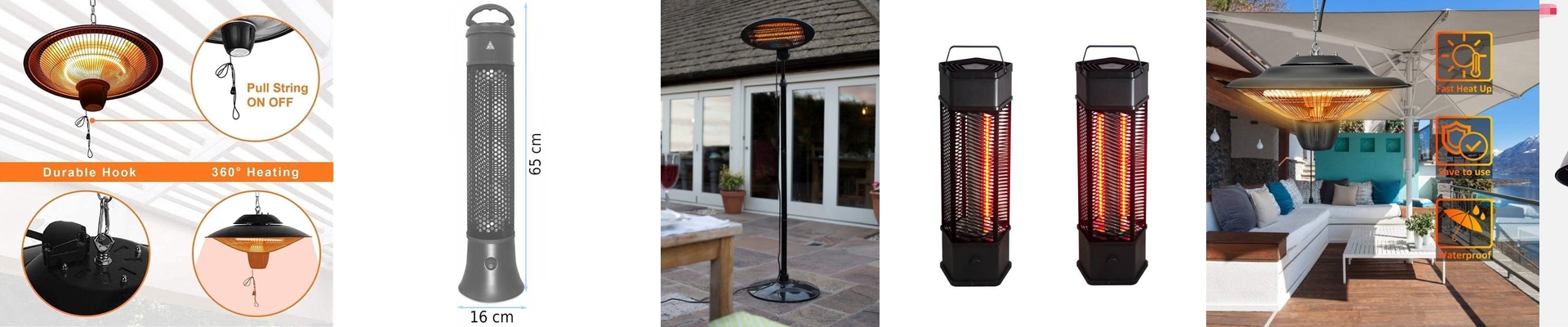
Forget the old way of just blasting heat into the air. We’re moving on from those one-and-done heaters. The future? It’s about a smart, electric garage heater that actually thinks for itself. It uses intelligent infrared tech to feel the room, and then adjusts its heat on the fly. You’re not just setting a number on a thermostat. You’re getting precise, targeted warmth that reacts to what’s happening around it.
So, how does it actually work?
Here’s the heart of the system: the shortwave infrared tube. This thing runs at high voltage, and it throws off some serious, focused heat. It doesn’t waste energy trying to warm up all the air in your giant garage. Instead, it goes straight to the source—the concrete floor, your car, your workbench. It’s a direct transfer. That’s why it’s so efficient. And get this—it’s a powerhouse in a small package. But because it’s so powerful, you need to make sure your electrical setup is ready for it. Your circuit has to be able to handle the full load without blinking.
The guts of the machine
We built this heater to be tough. The core is a quartz tube, filled with halogen. It heats up almost instantly, and it keeps the output steady. The filament inside is a workhorse, designed to handle the shock of being turned on and off over and over again without breaking. The R7s connector is the standard for a reason. It’s a solid, high-temp connection that’s a breeze to wire up and easy to maintain. And that special coating on the quartz? It’s not just for looks. It fine-tunes the heat spectrum, making sure all the energy goes into warming things up, not wasted on wavelengths that don’t matter.
What this means for you, in your garage
This design is a game-changer for anyone who actually uses their garage. You get a space that warms up fast, and you save money on your energy bill. The smart controls are constantly checking the environment, so they only use the power they need. If the garage is only half-full, or if it’s warmer outside, the heater knows. It doesn’t just run full blast all the time. Now, there is a trade-off. It’s a bit more complex. The system needs good sensor input, and it has to be calibrated properly when it’s installed. But once it’s set up right? It gives you a level of control over the heat that a basic heater just can’t touch. It’s a heater that works with your space, not against it. A practical, well-engineered solution for a tough environment.